We (kana)
ゑ in hiragana, or ヱ in katakana, is a nearly obsolete Japanese kana. The combination of a W-column kana letter with "ゑ゙" in hiragana was also introduced to represent [ve] in the 19th century and 20th century.
| we | |||
|---|---|---|---|
| |||
| transliteration | e, we | ||
| hiragana origin | 恵 | ||
| katakana origin | 恵 | ||
| Man'yōgana | 廻 恵 面 咲 | ||
| unicode | U+3091, U+30F1 | ||
| braille | 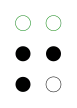 | ||


| kana gojūon | ||||||||||||||||||||||||||||||||||||||||||||||||||||||||||||
|---|---|---|---|---|---|---|---|---|---|---|---|---|---|---|---|---|---|---|---|---|---|---|---|---|---|---|---|---|---|---|---|---|---|---|---|---|---|---|---|---|---|---|---|---|---|---|---|---|---|---|---|---|---|---|---|---|---|---|---|---|
|
||||||||||||||||||||||||||||||||||||||||||||||||||||||||||||
| Kana modifiers and marks | ||||||||||||||||||||||||||||||||||||||||||||||||||||||||||||
| sokuonfu (gemination) · yōon (palatalization) · chōonpu (vowel lengthener) · Iteration marks · dakuten/handakuten (voiced & semi-voiced marks) | ||||||||||||||||||||||||||||||||||||||||||||||||||||||||||||
| Multi-syllabic kana | ||||||||||||||||||||||||||||||||||||||||||||||||||||||||||||
| iu · kashiko · koto · sama · shite · toki · tomo · nari · mairasesoro · yori | ||||||||||||||||||||||||||||||||||||||||||||||||||||||||||||
It is presumed that 'ゑ' represented [we] ( listen), and that ゑ and え indicated different pronunciations until somewhere between the Kamakura period and the Taishō period, when they both came to be pronounced as 'イェ' [je] (listen), later shifting to the modern 'エ' [e]. Along with the kana for wi ('ゐ' in hiragana, 'ヰ' in katakana), this kana was deemed obsolete in Japanese in 1946 and replaced with え and エ. It is now rare in everyday usage; in onomatopoeia or foreign words, the katakana form 'ウェ' (U-[small-e]) is preferred, as in "ウェスト" for "west".
The kana still sees some modern-day usage. Ebisu is usually written as "えびす", but sometimes "ゑびす" like Kyōto Ebisu Shrine (京都ゑびす神社, Kyōto Ebisu Jinja),[1] and name of the beer Yebisu (ヱビス), which is actually pronounced "Ebisu". The Japanese title of the Rebuild of Evangelion series is Evangelion: New Theatrical Edition (ヱヴァンゲリヲン新劇場版, Evangerion Shin Gekijōban). Katakana ヱ is sometimes written with a dakuten, ヹ, to represent a /ve/ sound in foreign words; however, most IMEs lack a convenient way to write this, and the combination ヴェ is far more common.
Hiragana ゑ is still used in several Okinawan orthographies for the syllable /we/. In the Ryūkyū University system, ゑ is also combined with a small ぃ (ゑぃ/ヱィ), to represent the sound /wi/. Katakana ヱ is used in Ainu for /we/.
Stroke order
| Animated | Diagram |
|---|---|
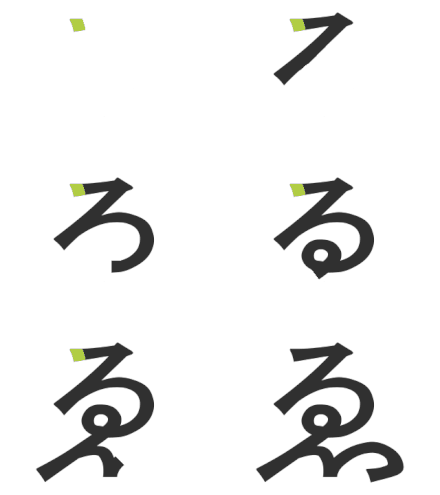 Stroke order in writing ゑ |
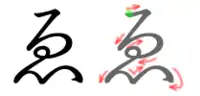 Stroke order in writing ゑ |
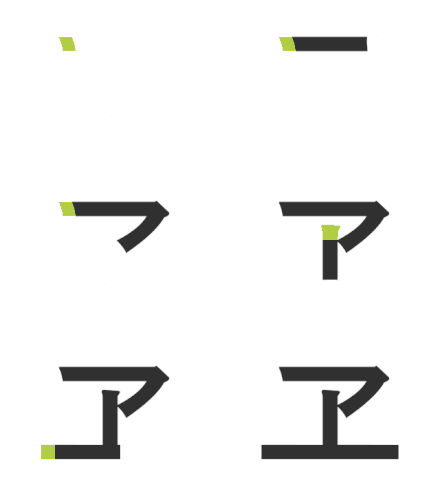 Stroke order in writing ヱ |
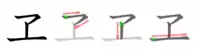 Stroke order in writing ヱ |
The hiragana ゑ is made with one stroke. It resembles a hiragana る that continues with a double-humped ん shape underneath.
The katakana ヱ is made with three strokes:
- A horizontal line that hooks down and to the left.
- A vertical line, just grazing the end of the first stroke.
- A long horizontal line across the bottom.
Other communicative representations
| Japanese radiotelephony alphabet | Wabun code |
| かぎのあるヱ Kagi no aru "We" |
▄ ▄▄▄ ▄▄▄ ▄ ▄ |
|
|
| ||
| Japanese Navy Signal Flag | Japanese semaphore | Japanese manual syllabary (fingerspelling) | Braille dots-235 Japanese Braille |


- Full Braille representation
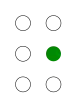
| ゑ / ヱ in Japanese Braille | |||
|---|---|---|---|
| ゑ / ヱ we | ヹ ve | ゑい / ヱー wē/wei | ヹー vē/vei |
|
 |
 |
|
| Preview | ゑ | ヱ | 𛅑 | |||
|---|---|---|---|---|---|---|
| Unicode name | HIRAGANA LETTER WE | KATAKANA LETTER WE | HIRAGANA LETTER SMALL WE | |||
| Encodings | decimal | hex | dec | hex | dec | hex |
| Unicode | 12433 | U+3091 | 12529 | U+30F1 | 110929 | U+1B151 |
| UTF-8 | 227 130 145 | E3 82 91 | 227 131 177 | E3 83 B1 | 240 155 133 145 | F0 9B 85 91 |
| UTF-16 | 12433 | 3091 | 12529 | 30F1 | 55340 56657 | D82C DD51 |
| Numeric character reference | ゑ | ゑ | ヱ | ヱ | 𛅑 | 𛅑 |
| Shift JIS[2] | 130 239 | 82 EF | 131 145 | 83 91 | ||
| EUC-JP[3] | 164 241 | A4 F1 | 165 241 | A5 F1 | ||
| GB 18030[4] | 164 241 | A4 F1 | 165 241 | A5 F1 | 147 54 132 51 | 93 36 84 33 |
| EUC-KR[5] / UHC[6] | 170 241 | AA F1 | 171 241 | AB F1 | ||
| Big5 (non-ETEN kana)[7] | 198 245 | C6 F5 | 199 171 | C7 AB | ||
| Big5 (ETEN / HKSCS)[8] | 199 120 | C7 78 | 199 237 | C7 ED | ||
| Preview | 𛅥 | ヹ | ㋽ | |||
|---|---|---|---|---|---|---|
| Unicode name | KATAKANA LETTER SMALL WE | KATAKANA LETTER VE | CIRCLED KATAKANA WE | |||
| Encodings | decimal | hex | dec | hex | dec | hex |
| Unicode | 110949 | U+1B165 | 12537 | U+30F9 | 13053 | U+32FD |
| UTF-8 | 240 155 133 165 | F0 9B 85 A5 | 227 131 185 | E3 83 B9 | 227 139 189 | E3 8B BD |
| UTF-16 | 55340 56677 | D82C DD65 | 12537 | 30F9 | 13053 | 32FD |
| Numeric character reference | 𛅥 | 𛅥 | ヹ | ヹ | ㋽ | ㋽ |
| Shift JIS (KanjiTalk 7)[9] | 136 108 | 88 6C | ||||
| Shift JIS (JIS X 0213)[10] | 132 148 | 84 94 | ||||
| EUC-JP (JIS X 0213)[11] | 167 244 | A7 F4 | ||||
| GB 18030[4] | 147 54 134 51 | 93 36 86 33 | 129 57 167 55 | 81 39 A7 37 | ||
References
- 京都ゑびす神社
- Unicode Consortium (2015-12-02) [1994-03-08]. "Shift-JIS to Unicode".
- Unicode Consortium; IBM. "EUC-JP-2007". International Components for Unicode.
- Standardization Administration of China (SAC) (2005-11-18). GB 18030-2005: Information Technology—Chinese coded character set.
- Unicode Consortium; IBM. "IBM-970". International Components for Unicode.
- Steele, Shawn (2000). "cp949 to Unicode table". Microsoft / Unicode Consortium.
- Unicode Consortium (2015-12-02) [1994-02-11]. "BIG5 to Unicode table (complete)".
- van Kesteren, Anne. "big5". Encoding Standard. WHATWG.
- Apple Computer (2005-04-05) [1995-04-15]. "Map (external version) from Mac OS Japanese encoding to Unicode 2.1 and later". Unicode Consortium.
- Project X0213 (2009-05-03). "Shift_JIS-2004 (JIS X 0213:2004 Appendix 1) vs Unicode mapping table".
- Project X0213 (2009-05-03). "EUC-JIS-2004 (JIS X 0213:2004 Appendix 3) vs Unicode mapping table".
See also
 |
Look up ゑ or ヱ in Wiktionary, the free dictionary. |
 |
Wikimedia Commons has media related to ゑ. |
|
Wikimedia Commons has media related to ヱ. |