Xia (Sixteen Kingdoms)
Xia (Chinese: 夏; pinyin: Xià), known in historiography as Hu Xia (胡夏), Northern Xia (北夏), Helian Xia (赫連夏) or the Great Xia (大夏), was a dynastic state of Xiongnu origin established by Helian Bobo during the Sixteen Kingdoms period in northern China. Prior to establishing the Xia, the imperial clan existed as a tribal entity known as the Tiefu (simplified Chinese: 铁弗; traditional Chinese: 鐵弗; pinyin: Tiěfú).[5]
Xia 夏 | |||||||||||||||
|---|---|---|---|---|---|---|---|---|---|---|---|---|---|---|---|
| 407–431 | |||||||||||||||
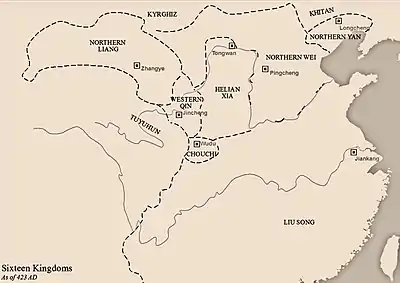 Helian Xia in 423 | |||||||||||||||
| Capital | Tongwan (418–427) Shanggui (427–428) Pingliang (428–430) | ||||||||||||||
| Government | Monarchy | ||||||||||||||
| Emperor | |||||||||||||||
• 407–425 | Helian Bobo | ||||||||||||||
• 425–428 | Helian Chang | ||||||||||||||
• 428–431 | Helian Ding | ||||||||||||||
| History | |||||||||||||||
• Established | 407 | ||||||||||||||
• Helian Bobo's claim of imperial title | 418 | ||||||||||||||
• Fall of Tongwan | 11 July 427[1][2] | ||||||||||||||
• Disestablished | 431 | ||||||||||||||
• Helian Ding's death | 13 May 432[3][4] | ||||||||||||||
| |||||||||||||||
| Today part of | China | ||||||||||||||

Although the Xia only lasted from 407 to 431, its capital Tongwan situated in the Ordos Desert was a heavily fortified and state-of-the-art city that served as a frontier garrison until the Song dynasty. Its ruins were discovered during the Qing dynasty and can still be seen in present-day Inner Mongolia.
The Book of Wei also records that Liu Kuren's tribe, the Dugu, were descended from the Xiongnu. Yao Weiyuan (姚薇元) suggested in the past that 'Dugu' was an alternate form of 'Tuge' (屠各), the Xiongnu aristocratic clan that had adopted the Han Chinese surname of Liu (劉), members of which also ruled the Former Zhao state. This writer further suggests that 'Tuge' is an alternate form of 'Tuhe' (徒河), which is the branch of the Xianbei from which the Murong (慕容) were descended. The Liu (Dugu) were also known as 'Tiefu' (鐵弗), a term which meant that they had Xiongnu fathers and Xianbei mothers. Thus it is reasonable to say that the Dugu were at least half Xianbei.
All rulers of the Xia declared themselves "emperors".
Chieftains of the Tiefu and rulers of the Xia
| Temple name | Posthumous names | Personal name | Durations of reign | Era names |
|---|---|---|---|---|
| Chieftains of the Tiefu | ||||
| – | Liu Qubei 劉去卑 | 260–272 | – | |
| – | Liu Gaoshengyuan 劉誥升爰 | 272–309 | – | |
| – | Liu Hu 劉虎 | 309–341 | – | |
| – | Liu Wuheng 劉務恆 | 341–356 | – | |
| – | Liu Eloutou 劉閼陋頭 | 356–358 | – | |
| – | Liu Xiwuqi 劉悉勿祈 | 358–359 | – | |
| – | Liu Weichen 劉衞辰 | 359–391 | – | |
| – | Liu Bobo | 391–407 | – | |
| Rulers of the Xia | ||||
| Shizu | Wulie | Helian Bobo (same person as Liu Bobo) | 407–425 | Longsheng (龍升) 407–413 Fengxiang (鳳翔) 413–418 Changwu (昌武) 418–419 Zhenxing (眞興) 419–425 |
| – | Helian Chang | 425–428 | Chengguang (承光) 425–428 | |
| – | Helian Ding | 428–431 | Shengguang (勝光) 428–431 | |
Rulers family tree
| Xia | |||||||||||||||||||||||||||||||||||||||||||||||||||||||||||||||||||||||||||||||||||||||||||||||||||||||||||||||||||||||||||||||||||||||||||||||||||||||||||||||||||||||||||||||||||||||||||||||||||||||||||||||||||||||||||||||||||||||||||||||||||||||||||||||||||||||||||||||||||||||||||||||||||||||||||||||||||||||||||||||||||||||||||||||||||||||||||||||||||||||||||||||||||||||||||||||||||||||||||||||||||||||||||||||||||||||||||||||||||||||||||||||||||||||||||||||||||||||||||||||||||||||||||||||||||||||||||||||||||||||||||||||||||||||||||||||||||||||||||||||||||||||||||||||||||||||||||||||||||||||||||||||||||||||||||||||||||||||||||||||||||||||||||||||||||||||||||||||||||||||||||||||||||||||||||||||||||||||||||||||||||||||||||||||||||||||||||||||||||||||||||||||||||||||||||||||||||||||||||||||||||||||||||||||||||||||||||||||||||||||||||||||||||||||||||||||||||||||||||||||||||||||||||||||||||||||||||||||||||||||||||||||||||||||||||||||||||||||||||||||||||||||||||||||||||||||||||||||||||||||
|---|---|---|---|---|---|---|---|---|---|---|---|---|---|---|---|---|---|---|---|---|---|---|---|---|---|---|---|---|---|---|---|---|---|---|---|---|---|---|---|---|---|---|---|---|---|---|---|---|---|---|---|---|---|---|---|---|---|---|---|---|---|---|---|---|---|---|---|---|---|---|---|---|---|---|---|---|---|---|---|---|---|---|---|---|---|---|---|---|---|---|---|---|---|---|---|---|---|---|---|---|---|---|---|---|---|---|---|---|---|---|---|---|---|---|---|---|---|---|---|---|---|---|---|---|---|---|---|---|---|---|---|---|---|---|---|---|---|---|---|---|---|---|---|---|---|---|---|---|---|---|---|---|---|---|---|---|---|---|---|---|---|---|---|---|---|---|---|---|---|---|---|---|---|---|---|---|---|---|---|---|---|---|---|---|---|---|---|---|---|---|---|---|---|---|---|---|---|---|---|---|---|---|---|---|---|---|---|---|---|---|---|---|---|---|---|---|---|---|---|---|---|---|---|---|---|---|---|---|---|---|---|---|---|---|---|---|---|---|---|---|---|---|---|---|---|---|---|---|---|---|---|---|---|---|---|---|---|---|---|---|---|---|---|---|---|---|---|---|---|---|---|---|---|---|---|---|---|---|---|---|---|---|---|---|---|---|---|---|---|---|---|---|---|---|---|---|---|---|---|---|---|---|---|---|---|---|---|---|---|---|---|---|---|---|---|---|---|---|---|---|---|---|---|---|---|---|---|---|---|---|---|---|---|---|---|---|---|---|---|---|---|---|---|---|---|---|---|---|---|---|---|---|---|---|---|---|---|---|---|---|---|---|---|---|---|---|---|---|---|---|---|---|---|---|---|---|---|---|---|---|---|---|---|---|---|---|---|---|---|---|---|---|---|---|---|---|---|---|---|---|---|---|---|---|---|---|---|---|---|---|---|---|---|---|---|---|---|---|---|---|---|---|---|---|---|---|---|---|---|---|---|---|---|---|---|---|---|---|---|---|---|---|---|---|---|---|---|---|---|---|---|---|---|---|---|---|---|---|---|---|---|---|---|---|---|---|---|---|---|---|---|---|---|---|---|---|---|---|---|---|---|---|---|---|---|---|---|---|---|---|---|---|---|---|---|---|---|---|---|---|---|---|---|---|---|---|---|---|---|---|---|---|---|---|---|---|---|---|---|---|---|---|---|---|---|---|---|---|---|---|---|---|---|---|---|---|---|---|---|---|---|---|---|---|---|---|---|---|---|---|---|---|---|---|---|---|---|---|---|---|---|---|---|---|---|---|---|---|---|---|---|---|---|---|---|---|---|---|---|---|---|---|---|---|---|---|---|---|---|---|---|---|---|---|---|---|---|---|---|---|---|---|---|---|---|---|---|---|---|---|---|---|---|---|---|---|---|---|---|---|---|---|---|---|---|---|---|---|---|---|---|---|---|---|---|---|---|---|---|---|---|---|---|---|---|---|---|---|---|---|---|---|---|---|---|---|---|---|---|---|---|---|---|---|---|---|---|---|---|---|---|---|---|---|---|---|---|---|---|---|---|---|---|---|---|---|---|---|---|---|---|---|---|---|---|---|---|---|---|---|---|---|---|---|---|---|---|---|---|---|---|---|---|---|---|---|---|---|---|---|---|---|---|---|---|---|---|---|---|---|---|---|---|---|---|---|---|---|---|---|---|---|---|---|---|---|---|---|---|---|---|---|---|---|---|---|---|---|---|---|---|---|---|---|---|---|---|---|---|---|---|---|---|---|---|---|---|---|---|---|---|---|---|---|---|---|---|---|---|---|---|---|---|---|---|---|---|---|---|---|---|---|---|---|---|---|---|---|---|---|---|---|---|---|---|---|---|---|---|---|---|---|---|---|---|---|---|---|---|---|---|---|---|---|---|---|---|---|---|---|---|---|---|---|---|---|---|---|---|---|---|---|---|---|---|---|---|---|---|---|---|---|---|---|---|---|---|---|---|---|---|---|---|---|---|---|---|---|---|---|---|---|---|---|---|---|---|---|---|---|---|---|---|---|---|---|---|---|---|---|---|---|---|---|---|---|---|---|---|---|---|---|---|---|---|---|---|---|---|---|---|---|---|---|---|---|---|---|---|---|---|---|---|---|---|---|---|---|---|---|---|---|---|---|---|---|---|---|---|---|---|---|---|---|---|---|---|---|---|---|---|---|---|---|---|---|---|---|---|---|---|---|---|---|---|---|---|---|---|---|---|---|---|---|---|---|---|---|---|---|---|---|---|---|---|---|---|---|---|
| |||||||||||||||||||||||||||||||||||||||||||||||||||||||||||||||||||||||||||||||||||||||||||||||||||||||||||||||||||||||||||||||||||||||||||||||||||||||||||||||||||||||||||||||||||||||||||||||||||||||||||||||||||||||||||||||||||||||||||||||||||||||||||||||||||||||||||||||||||||||||||||||||||||||||||||||||||||||||||||||||||||||||||||||||||||||||||||||||||||||||||||||||||||||||||||||||||||||||||||||||||||||||||||||||||||||||||||||||||||||||||||||||||||||||||||||||||||||||||||||||||||||||||||||||||||||||||||||||||||||||||||||||||||||||||||||||||||||||||||||||||||||||||||||||||||||||||||||||||||||||||||||||||||||||||||||||||||||||||||||||||||||||||||||||||||||||||||||||||||||||||||||||||||||||||||||||||||||||||||||||||||||||||||||||||||||||||||||||||||||||||||||||||||||||||||||||||||||||||||||||||||||||||||||||||||||||||||||||||||||||||||||||||||||||||||||||||||||||||||||||||||||||||||||||||||||||||||||||||||||||||||||||||||||||||||||||||||||||||||||||||||||||||||||||||||||||||||||||||||||
References
- "中央研究院網站".
- Zizhi Tongjian, vol. 120.
- "中央研究院網站".
- Zizhi Tongjian, vol. 122.
- Grousset, Rene (1970). The Empire of the Steppes. Rutgers University Press. pp. 61. ISBN 0-8135-1304-9.