Cullinia
Cullinia is an extinct genus of litoptern, an order of South American native ungulates that included horse-like and camel-like animals such as Macrauchenia. It is only known from fragmentary remains. Cullinia levis is known from Chasicoan remains found in the Arroyo Chasicó Formation of Argentina, and remains from the Brazilian state of Acre and the Huayquerian Ituzaingó Formation have been assigned to Cullinia sp.. [1]
| Cullinia | |
|---|---|
Scientific classification  | |
| Kingdom: | Animalia |
| Phylum: | Chordata |
| Class: | Mammalia |
| Order: | †Litopterna |
| Family: | †Macraucheniidae |
| Subfamily: | †Macraucheniinae |
| Genus: | †Cullinia Cabrera & Kraglievich, 1931 |
| Type species | |
| Cullinia levis | |
History and Etymology
Cullinia was described in 1931 by Cabrera and Kraglievich, from MLP 29-IX-178, an holotype containing several fragmentary remains including a mandible and a metatarsal. In 1995, Bond and López add to the holotype other remains from the upper dentition.[2]
It was named from the Araucanian word "cullin", meaning "animal".[1]
Description
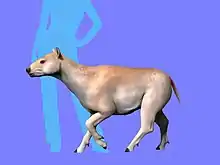
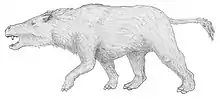
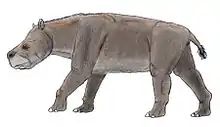
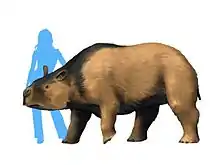
Cullinia was a slender, small Macraucheniidae. It had proportionally larger metapodials than Theosodon, and its first lower molar was absent.[1]
Classification
Cladogram based in the phylogenetic analysis published by Schmidt et al., 2014, showing the position of Cullinia:[3]
| |||||||||||||||||||||||||||||||||||||||||||||||||||||||||||||||||||||||||||||||||||||||||||||||||
References
- Cabrera, A.; Kraglievich, J. L. (1931). "Diagnosis previas de los ungulados fósiles del arroyo Chasicó". Journal of Mammalian Evolution. 1: 107–113.
- Schmidt, Gabriela I. (2013). Litopterna y Notoungulata (Mammalia) de la formación Ituzaingó (Mioceno tardío-Plioceno) de la provincia de Entre Ríos: sistemática, bioestratigrafía y paleobiogeografía (Thesis). Universidad Nacional de La Plata. doi:10.35537/10915/26442.
- Schmidt, Gabriela I.; Ferrero, Brenda S. (September 2014). "Taxonomic Reinterpretation of Theosodon hystatus Cabrera and Kraglievich, 1931 (Litopterna, Macraucheniidae) and Phylogenetic Relationships of the Family". Journal of Vertebrate Paleontology. 34 (5): 1231–1238. doi:10.1080/02724634.2014.837393.
Genera of South American native ungulates | |||||||||||||||||||||||||||||||||||||||||||||||||||||||||||||||||||||||||||||
|---|---|---|---|---|---|---|---|---|---|---|---|---|---|---|---|---|---|---|---|---|---|---|---|---|---|---|---|---|---|---|---|---|---|---|---|---|---|---|---|---|---|---|---|---|---|---|---|---|---|---|---|---|---|---|---|---|---|---|---|---|---|---|---|---|---|---|---|---|---|---|---|---|---|---|---|---|---|
| |||||||||||||||||||||||||||||||||||||||||||||||||||||||||||||||||||||||||||||
| |||||||||||||||||||||||||||||||||||||||||||||||||||||||||||||||||||||||||||||
| |||||||||||||||||||||||||||||||||||||||||||||||||||||||||||||||||||||||||||||
| |||||||||||||||||||||||||||||||||||||||||||||||||||||||||||||||||||||||||||||
.jpg.webp)