Rissa, Norway
Rissa is a former municipality in the old Sør-Trøndelag county in Norway in the Fosen region. The municipality existed from 1860 until its dissolution on 1 January 2018 when it became part of the municipality of Indre Fosen in Trøndelag county. The administrative centre of the municipality was the village of Årnset. Other villages in the municipality included Askjem, Hasselvika, Husbysjøen, Rørvika, Råkvåg, and Stadsbygd.
Rissa kommune | |
|---|---|
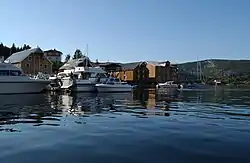 View of the harbour at Råkvåg | |
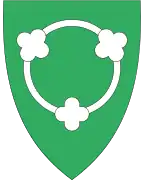 Coat of arms 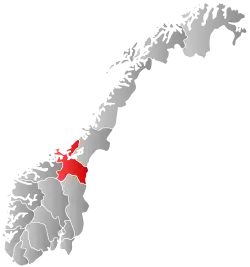 Sør-Trøndelag within Norway | |
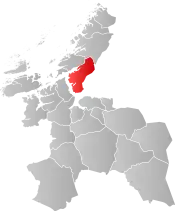 Rissa within Sør-Trøndelag | |
| Coordinates: 63°39′20″N 10°02′23″E | |
| Country | Norway |
| County | Sør-Trøndelag |
| District | Fosen |
| Established | 1860 |
| Disestablished | 1 Jan 2018 |
| Administrative centre | Årnset |
| Area | |
| • Total | 621.37 km2 (239.91 sq mi) |
| • Land | 587.85 km2 (226.97 sq mi) |
| • Water | 33.52 km2 (12.94 sq mi) |
| • Rank | #179/426 in Norway |
| *Area at municipal dissolution. | |
| Population (2017) | |
| • Total | 6,628 |
| • Rank | #158/426 in Norway |
| • Density | 11.3/km2 (29/sq mi) |
| • Change (10 years) |  +4.1% |
| Demonym(s) | Rissværing[1] |
| Time zone | UTC+01:00 (CET) |
| • Summer (DST) | UTC+02:00 (CEST) |
| ISO 3166 code | NO-1624 |
| Official language form | Neutral[2] |
| Preceded by | Stadsbygd in 1860 |
| Succeeded by | Indre Fosen in 2018 |
The 621-square-kilometre (240 sq mi) municipality was the 179th largest by area out of the then 426 municipalities in Norway. Rissa was the 158th most populous municipality in Norway with a population of 6,628. The municipality's population density was 11.3 inhabitants per square kilometre (29/sq mi) and its population had increased by 4.1% over the last decade.[3]
The municipality was located on the southern end of the Fosen peninsula along the Trondheimsfjord and the Stjørnfjord. The large lake Storvatnet lies on the eastern border with Lensvik. To the north were the municipalities of Åfjord, Bjugn, and Ørland.
The Flakk–Rørvik Ferry crosses the Trondheimsfjord connecting the village of Rørvik with the city of Trondheim.
Toponym
The Old Norse form of the name was Rissi. This was probably the old name of the brackish basin of Botn (literally "the bottom" of the fjord). Even though this is a heavily land-locked fjord with a river-like inlet from the Trondheimsfjord (it was probably a shallow bay in prehistoric times). The name is probably derived from the verb rísa which means "raise" or "rise". (The average water level of Botnen is today about 1.7 metres (5 ft 7 in) above mean sea level and the surface water is almost fresh from accumulated internal runoff.) The name of the municipality was historically spelled Rissen.[4]
Governance
On 1 January 2018, the neighboring municipalities of Rissa and Leksvik merged to form the new municipality of Indre Fosen which became part of the new Trøndelag county on the same date.[5]
Former local government
The former municipality of Rissen was established in 1860 when it was separated from the big municipality of Stadsbygd. Initially, Rissen had 3,733 residents. The spelling was later changed to Rissa. On 1 January 1905, the southwestern district of Lensvik (population: 1,019) on the west side of the Trondheimsfjord was separated from Rissa to form a municipality of its own. This left Rissa with 3,394 residents. During the 1960s, there were many municipal mergers across Norway due to the work of the Schei Committee. On 1 January 1964, most of Stadsbygd municipality (except for the Ingdalen area) and the southern part of the municipality of Stjørna were merged with Rissa to form a new, enlarged municipality of Rissa.[6]
A coat of arms was granted on 23 January 1987. The arms show a silver crown on a green background. The crown is that of Skule Bårdsson as it is depicted on an old tombstone at the Nidaros Cathedral. Bårdsson was the founder of Rein kloster and the accompanying farm and Rein estate, which lies in the municipality. The crown is a typical headdress used by the medieval Norwegian dukes.[7]
The municipal government of Rissa was responsible for primary education (through 10th grade), outpatient health services, senior citizen services, unemployment and other social services, zoning, economic development, and municipal roads. The municipality is governed by a municipal council of elected representatives, which in turn elect a mayor.
Municipal council
The municipal council (Kommunestyre) of Rissa was made up of 23 representatives that are elected to four year terms. The party breakdown of the final municipal council was as follows:
| Party Name (in Norwegian) | Number of representatives | |
|---|---|---|
| Labour Party (Arbeiderpartiet) | 5 | |
| Progress Party (Fremskrittspartiet) | 1 | |
| Green Party (Miljøpartiet De Grønne) | 1 | |
| Conservative Party (Høyre) | 7 | |
| Christian Democratic Party (Kristelig Folkeparti) | 1 | |
| Pensioners' Party (Pensjonistpartiet) | 2 | |
| Centre Party (Senterpartiet) | 4 | |
| Socialist Left Party (Sosialistisk Venstreparti) | 1 | |
| Liberal Party (Venstre) | 1 | |
| Total number of members: | 23 | |
| Party Name (in Norwegian) | Number of representatives | |
|---|---|---|
| Labour Party (Arbeiderpartiet) | 5 | |
| Progress Party (Fremskrittspartiet) | 2 | |
| Conservative Party (Høyre) | 8 | |
| Christian Democratic Party (Kristelig Folkeparti) | 1 | |
| Pensioners' Party (Pensjonistpartiet) | 1 | |
| Centre Party (Senterpartiet) | 4 | |
| Socialist Left Party (Sosialistisk Venstreparti) | 1 | |
| Liberal Party (Venstre) | 1 | |
| Total number of members: | 23 | |
| Party Name (in Norwegian) | Number of representatives | |
|---|---|---|
| Labour Party (Arbeiderpartiet) | 11 | |
| Progress Party (Fremskrittspartiet) | 2 | |
| Conservative Party (Høyre) | 2 | |
| Christian Democratic Party (Kristelig Folkeparti) | 2 | |
| Pensioners' Party (Pensjonistpartiet) | 1 | |
| Centre Party (Senterpartiet) | 6 | |
| Socialist Left Party (Sosialistisk Venstreparti) | 2 | |
| Liberal Party (Venstre) | 1 | |
| Total number of members: | 27 | |
| Party Name (in Norwegian) | Number of representatives | |
|---|---|---|
| Labour Party (Arbeiderpartiet) | 10 | |
| Progress Party (Fremskrittspartiet) | 2 | |
| Conservative Party (Høyre) | 2 | |
| Christian Democratic Party (Kristelig Folkeparti) | 2 | |
| Centre Party (Senterpartiet) | 7 | |
| Socialist Left Party (Sosialistisk Venstreparti) | 3 | |
| Liberal Party (Venstre) | 1 | |
| Total number of members: | 27 | |
| Party Name (in Norwegian) | Number of representatives | |
|---|---|---|
| Labour Party (Arbeiderpartiet) | 15 | |
| Progress Party (Fremskrittspartiet) | 1 | |
| Conservative Party (Høyre) | 4 | |
| Christian Democratic Party (Kristelig Folkeparti) | 4 | |
| Centre Party (Senterpartiet) | 9 | |
| Socialist Left Party (Sosialistisk Venstreparti) | 2 | |
| Liberal Party (Venstre) | 2 | |
| Total number of members: | 37 | |
| Party Name (in Norwegian) | Number of representatives | |
|---|---|---|
| Labour Party (Arbeiderpartiet) | 12 | |
| Progress Party (Fremskrittspartiet) | 1 | |
| Conservative Party (Høyre) | 3 | |
| Christian Democratic Party (Kristelig Folkeparti) | 4 | |
| Centre Party (Senterpartiet) | 13 | |
| Socialist Left Party (Sosialistisk Venstreparti) | 2 | |
| Liberal Party (Venstre) | 2 | |
| Total number of members: | 37 | |
| Party Name (in Norwegian) | Number of representatives | |
|---|---|---|
| Labour Party (Arbeiderpartiet) | 10 | |
| Conservative Party (Høyre) | 4 | |
| Christian Democratic Party (Kristelig Folkeparti) | 4 | |
| Centre Party (Senterpartiet) | 13 | |
| Socialist Left Party (Sosialistisk Venstreparti) | 5 | |
| Liberal Party (Venstre) | 1 | |
| Total number of members: | 37 | |
| Party Name (in Norwegian) | Number of representatives | |
|---|---|---|
| Labour Party (Arbeiderpartiet) | 13 | |
| Progress Party (Fremskrittspartiet) | 1 | |
| Conservative Party (Høyre) | 5 | |
| Christian Democratic Party (Kristelig Folkeparti) | 4 | |
| Centre Party (Senterpartiet) | 10 | |
| Socialist Left Party (Sosialistisk Venstreparti) | 2 | |
| Liberal Party (Venstre) | 2 | |
| Total number of members: | 37 | |
| Party Name (in Norwegian) | Number of representatives | |
|---|---|---|
| Labour Party (Arbeiderpartiet) | 13 | |
| Conservative Party (Høyre) | 6 | |
| Christian Democratic Party (Kristelig Folkeparti) | 5 | |
| Centre Party (Senterpartiet) | 9 | |
| Socialist Left Party (Sosialistisk Venstreparti) | 1 | |
| Liberal Party (Venstre) | 2 | |
| Local list for South-Stjørna (Bygdeliste for Sør-Stjørna) | 1 | |
| Total number of members: | 37 | |
| Party Name (in Norwegian) | Number of representatives | |
|---|---|---|
| Labour Party (Arbeiderpartiet) | 12 | |
| Conservative Party (Høyre) | 6 | |
| Christian Democratic Party (Kristelig Folkeparti) | 5 | |
| Centre Party (Senterpartiet) | 9 | |
| Socialist Left Party (Sosialistisk Venstreparti) | 1 | |
| Liberal Party (Venstre) | 1 | |
| Local list for South-Stjørna (Bygdeliste for Sør-Stjørna) | 3 | |
| Total number of members: | 37 | |
| Party Name (in Norwegian) | Number of representatives | |
|---|---|---|
| Labour Party (Arbeiderpartiet) | 10 | |
| Conservative Party (Høyre) | 3 | |
| Christian Democratic Party (Kristelig Folkeparti) | 6 | |
| New People's Party (Nye Folkepartiet) | 1 | |
| Centre Party (Senterpartiet) | 12 | |
| Socialist Left Party (Sosialistisk Venstreparti) | 1 | |
| Liberal Party (Venstre) | 1 | |
| Local list for South-Stjørna (Bygdeliste for Sør-Stjørna) | 3 | |
| Total number of members: | 37 | |
| Party Name (in Norwegian) | Number of representatives | |
|---|---|---|
| Labour Party (Arbeiderpartiet) | 13 | |
| Conservative Party (Høyre) | 3 | |
| Christian Democratic Party (Kristelig Folkeparti) | 5 | |
| Centre Party (Senterpartiet) | 11 | |
| Socialist People's Party (Sosialistisk Folkeparti) | 1 | |
| Liberal Party (Venstre) | 4 | |
| Total number of members: | 37 | |
| Party Name (in Norwegian) | Number of representatives | |
|---|---|---|
| Labour Party (Arbeiderpartiet) | 12 | |
| Conservative Party (Høyre) | 4 | |
| Christian Democratic Party (Kristelig Folkeparti) | 5 | |
| Centre Party (Senterpartiet) | 9 | |
| Socialist People's Party (Sosialistisk Folkeparti) | 1 | |
| Liberal Party (Venstre) | 6 | |
| Total number of members: | 37 | |
| Party Name (in Norwegian) | Number of representatives | |
|---|---|---|
| Labour Party (Arbeiderpartiet) | 14 | |
| Conservative Party (Høyre) | 3 | |
| Christian Democratic Party (Kristelig Folkeparti) | 6 | |
| Centre Party (Senterpartiet) | 10 | |
| Liberal Party (Venstre) | 4 | |
| Total number of members: | 37 | |
| Party Name (in Norwegian) | Number of representatives | |
|---|---|---|
| Labour Party (Arbeiderpartiet) | 5 | |
| Conservative Party (Høyre) | 1 | |
| Christian Democratic Party (Kristelig Folkeparti) | 3 | |
| Centre Party (Senterpartiet) | 6 | |
| Liberal Party (Venstre) | 3 | |
| Local List(s) (Lokale lister) | 3 | |
| Total number of members: | 21 | |
| Party Name (in Norwegian) | Number of representatives | |
|---|---|---|
| Labour Party (Arbeiderpartiet) | 6 | |
| Conservative Party (Høyre) | 1 | |
| Christian Democratic Party (Kristelig Folkeparti) | 3 | |
| Farmers' Party (Bondepartiet) | 6 | |
| Liberal Party (Venstre) | 3 | |
| Local List(s) (Lokale lister) | 2 | |
| Total number of members: | 21 | |
| Party Name (in Norwegian) | Number of representatives | |
|---|---|---|
| Labour Party (Arbeiderpartiet) | 6 | |
| Conservative Party (Høyre) | 2 | |
| Christian Democratic Party (Kristelig Folkeparti) | 2 | |
| Farmers' Party (Bondepartiet) | 5 | |
| Liberal Party (Venstre) | 4 | |
| Local List(s) (Lokale lister) | 1 | |
| Total number of members: | 20 | |
| Party Name (in Norwegian) | Number of representatives | |
|---|---|---|
| Labour Party (Arbeiderpartiet) | 5 | |
| Christian Democratic Party (Kristelig Folkeparti) | 3 | |
| Farmers' Party (Bondepartiet) | 4 | |
| Liberal Party (Venstre) | 5 | |
| Local List(s) (Lokale lister) | 3 | |
| Total number of members: | 20 | |
| Party Name (in Norwegian) | Number of representatives | |
|---|---|---|
| Labour Party (Arbeiderpartiet) | 5 | |
| Communist Party (Kommunistiske Parti) | 1 | |
| Christian Democratic Party (Kristelig Folkeparti) | 2 | |
| Farmers' Party (Bondepartiet) | 4 | |
| Liberal Party (Venstre) | 5 | |
| Local List(s) (Lokale lister) | 3 | |
| Total number of members: | 20 | |
| Party Name (in Norwegian) | Number of representatives | |
|---|---|---|
| Labour Party (Arbeiderpartiet) | 3 | |
| Conservative Party (Høyre) | 1 | |
| Farmers' Party (Bondepartiet) | 6 | |
| Liberal Party (Venstre) | 6 | |
| Local List(s) (Lokale lister) | 4 | |
| Total number of members: | 20 | |
| Note: Due to the German occupation of Norway during World War II, no elections were held for new municipal councils until after the war ended in 1945. | ||
Landslide
In April 1978, a major quick-clay landslide occurred south of Rissa at 63.55624°N 9.9446978°E. An area of 330,000 m2 (3,600,000 sq ft) sent 6,000,000 m3 (7,800,000 cu yd) of quick clay slid down into the shores of Botn. The landslip caused a tsunami to strike the north shore at Leira, which destroyed a saw mill and flooded several houses. Of the 40 people who were in the area at the time of the slide, only one person died. A large portion of the slide was recorded on film by two amateur photographers. Almost four years after the event, a new road and stabilisation work in the area had removed most traces of the slide. The area being returned to agricultural use.[25]
Churches
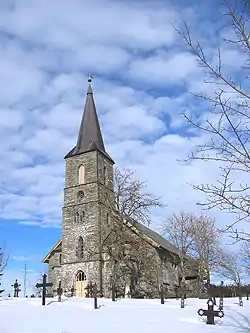
The Church of Norway had four parishes (sokn) within the municipality of Rissa. It was part of the Fosen prosti (deanery) in the Diocese of Nidaros.
| Parish (sokn) | Church name | Location of the church | Year built |
|---|---|---|---|
| Hasselvika | Hasselvika Church | Hasselvika | 1951 |
| Rissa | Rissa Church | Leira | 1888 |
| Rein Church | Reinsgrenda | 1932 | |
| Stadsbygd | Stadsbygd Church | Stadsbygd | 1842 |
| Sør-Stjørna | Ramsvik Church | Råkvåg | 1909 |
| Frengen Church | Frengen | 1972 |
References
- "Navn på steder og personer: Innbyggjarnamn" (in Norwegian). Språkrådet.
- "Forskrift om målvedtak i kommunar og fylkeskommunar" (in Norwegian). Lovdata.no.
- Statistisk sentralbyrå (2017). "Table: 06913: Population 1 January and population changes during the calendar year (M)" (in Norwegian). Retrieved 2017-10-07.
- Rygh, Oluf (1901). Norske gaardnavne: Søndre Trondhjems amt (in Norwegian) (14 ed.). Kristiania, Norge: W. C. Fabritius & sønners bogtrikkeri. p. 101.
- "Om Indre Fosen" (in Norwegian). Retrieved 2017-10-07.
- Jukvam, Dag (1999). "Historisk oversikt over endringer i kommune- og fylkesinndelingen" (PDF) (in Norwegian). Statistisk sentralbyrå.
- Norske Kommunevåpen (1990). "Nye kommunevåbener i Norden". Retrieved 27 October 2008.
- "Table: 04813: Members of the local councils, by party/electoral list at the Municipal Council election (M)" (in Norwegian). Statistics Norway.
- "Tall for Norge: Kommunestyrevalg 2011 – Sør-Trøndelag". Valg Direktoratet. Retrieved 2020-04-19.
- "Kommunestyrevalget 1995" (PDF) (in Norwegian). Oslo-Kongsvinger: Statistisk sentralbyrå. 1996. Retrieved 2020-04-14.
- "Kommunestyrevalget 1991" (PDF) (in Norwegian). Oslo-Kongsvinger: Statistisk sentralbyrå. 1993. Retrieved 2020-04-14.
- "Kommunestyrevalget 1987" (PDF) (in Norwegian). Oslo-Kongsvinger: Statistisk sentralbyrå. 1988. Retrieved 2020-04-14.
- "Kommunestyrevalget 1983" (PDF) (in Norwegian). Oslo-Kongsvinger: Statistisk sentralbyrå. 1984. Retrieved 2020-04-14.
- "Kommunestyrevalget 1979" (PDF) (in Norwegian). Oslo: Statistisk sentralbyrå. 1979. Retrieved 2020-04-14.
- "Kommunevalgene 1975" (PDF) (in Norwegian). Oslo: Statistisk sentralbyrå. 1977. Retrieved 2020-04-14.
- "Kommunevalgene 1972" (PDF) (in Norwegian). Oslo: Statistisk sentralbyrå. 1973. Retrieved 2020-04-14.
- "Kommunevalgene 1967" (PDF) (in Norwegian). Oslo: Statistisk sentralbyrå. 1967. Retrieved 2020-04-14.
- "Kommunevalgene 1963" (PDF) (in Norwegian). Oslo: Statistisk sentralbyrå. 1964. Retrieved 2020-04-14.
- "Kommunevalgene og Ordførervalgene 1959" (PDF) (in Norwegian). Oslo: Statistisk sentralbyrå. 1960. Retrieved 2020-04-14.
- "Kommunevalgene og Ordførervalgene 1955" (PDF) (in Norwegian). Oslo: Statistisk sentralbyrå. 1957. Retrieved 2020-04-14.
- "Kommunevalgene og Ordførervalgene 1951" (PDF) (in Norwegian). Oslo: Statistisk sentralbyrå. 1952. Retrieved 2020-04-14.
- "Kommunevalgene og Ordførervalgene 1947" (PDF) (in Norwegian). Oslo: Statistisk sentralbyrå. 1948. Retrieved 2020-04-14.
- "Kommunevalgene og Ordførervalgene 1945" (PDF) (in Norwegian). Oslo: Statistisk sentralbyrå. 1947. Retrieved 2020-04-14.
- "Kommunevalgene og Ordførervalgene 1937" (PDF) (in Norwegian). Oslo: Statistisk sentralbyrå. 1938. Retrieved 2020-04-14.
- NGI presents the Rissa Landslide: quick clay in Norway (Motion picture). Oslo, norway: Norwegian Geotechnical Institute. 1981. Retrieved 2020-12-31.
External links
 |
Wikimedia Commons has media related to Rissa, Trøndelag. |
- The Quick Clay Landslide at Rissa (Youtube video)
 Trøndelag travel guide from Wikivoyage
| |||
 | Towns and cities | 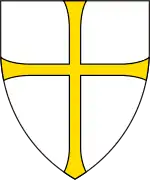 | |
| Municipalities | |||